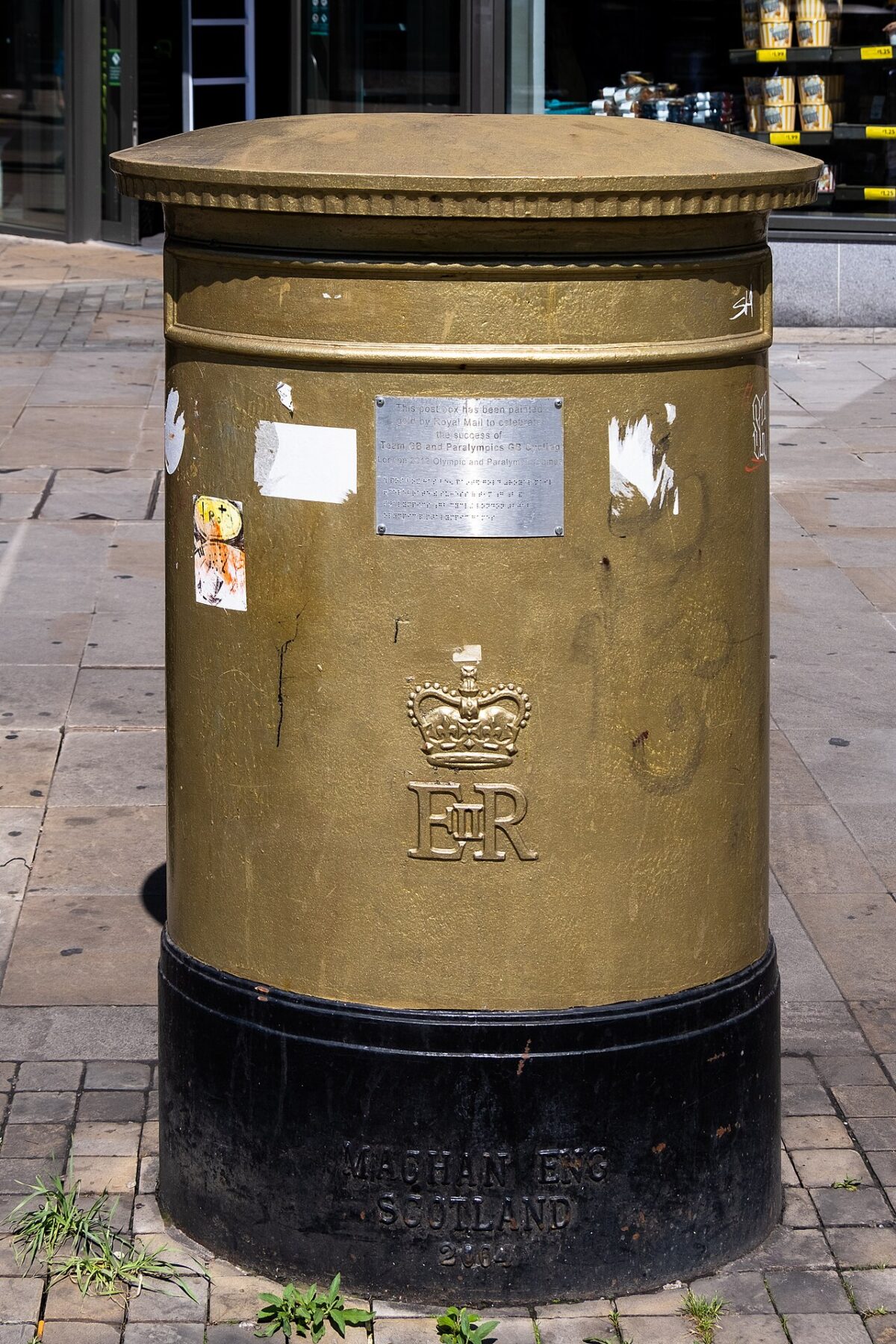

Mailbox Pic of the Day for 2026-04-08.
Source: Wikimedia Commons — Jaakko.kulta | CC BY 4.0 | license
Signal over noise. Curated with care.
Mailbox Pic of the Day for 2026-04-08.
Source: Wikimedia Commons — Jaakko.kulta | CC BY 4.0 | license
Mailbox Pic of the Day for 2026-04-06.
Source: Wikimedia Commons — DS Pugh | The Mailbox by DS Pugh | CC BY-SA 2.0 | license
Mailbox Pic of the Day for 2026-04-05.
Source: Wikimedia Commons — Emilius123 | CC BY-SA 4.0 | license
Mailbox Pic of the Day for 2026-04-04.
Source: Wikimedia Commons — Donald Trung Quoc Don (Chữ Hán: 徵國單) – Wikimedia Commons – © CC BY-SA 4.0 International.(Want to use this image?)Original publication 📤: –Donald Trung 『徵國單』 (No Fake News 💬) (WikiProject Numismatics 💴) (Articles 📚) 20:51, 3 January 2020 (UTC) | CC BY-SA 4.0 | license
Category: Penguin News Saturdigest
If this week had a theme, it was friction: between imagination and hardware, speed and quality, automation and judgment. The tech headlines leaned hard into that tension, while the broader news cycle reminded us that human stakes are never abstract for long. Below is a fast, opinionated lap through ten stories that seem to capture where things are moving, and where they might wobble next.
According to The Verge, a writer outlined nine features their “dream pair” of AR gaming glasses should include.
This suggests AR wearables are still in the “wishlist phase” for many power users: promising enough to inspire detailed demands, but not yet settled enough to feel inevitable. The interesting signal is less any one feature and more the expectation that glasses should integrate cleanly with existing gaming ecosystems, not force a whole new lifestyle.
According to Slashdot, research indicates “cognitive surrender” can lead AI users to abandon logical thinking.
Even from the headline alone, the warning is clear: convenience can quietly become dependency. In practice, this points to a literacy challenge, not just a tooling challenge. If people treat model output like authority instead of draft material, the cost is subtle at first and expensive later, especially in education, policy, and technical work.
According to The Register, speakers tied to Netflix, Meta, and IBM argued AI could make anyone a “10x programmer,” while also creating “10x the cleanup.”
That framing feels unusually honest for conference talk: acceleration and mess arriving together. The most believable part is the cleanup burden. Teams can ship more generated code, docs, and architecture sketches faster than they can verify them, which means engineering advantage may increasingly come from review discipline, not raw output volume.
According to TechCrunch, a longtime cybersecurity veteran has shifted from fighting malware to hacking drones.
This appears to reflect how cyber expertise is moving into physical systems at higher speed. Drones are software-defined enough to reward traditional security instincts, but physical enough that failures carry immediate real-world consequences. Expect this boundary-crossing to become common as robotics, logistics, and defense stacks become increasingly programmable.
According to The Verge, creators are now facing a “really, you made this without AI?” credibility test.
That headline signals a cultural inversion: once, people had to prove technical assistance existed; now, some may feel pressure to prove it did not. The deeper issue is trust labeling. Creative fields may need clearer norms around process disclosure, not to police taste, but to keep attribution, labor value, and audience expectations legible.
According to Wired, the Sonos Play review frames the product as “performance meets convenience.”
Review language like this usually indicates a category fighting maturity fatigue: consumers want setup simplicity and respectable fidelity without tinkering. The bigger market read is that “good enough plus seamless” still wins in mainstream audio. Purists will debate details, but convenience continues to define where scale actually happens.
According to The Verge, Super Meat Boy 3D turns suffering into fun.
That’s a great capsule for a certain game-design tradition: high difficulty, tight control, fast retries, and eventual mastery as reward. The move into 3D suggests confidence that the franchise’s pain-and-precision identity can survive a format shift. If it works, it will reinforce that challenge-driven games still have a strong audience in the era of endless live-service comfort loops.
According to BBC, a Russian attack on a market in Ukraine killed five people.
The headline points to yet another civilian-space tragedy in a war already defined by prolonged human toll. Beyond geopolitics, this kind of report underscores how ordinary places remain vulnerable in modern conflict. It is difficult reading, and it should be: normalization is one of the quietest risks in long-running wars.
According to BBC, Feyi-Waboso starred as Exeter held off a Munster charge.
Sports headlines like this usually capture two stories at once: an individual performance and a team surviving pressure late. For neutral readers, this is the fun part of rugby coverage: momentum swings, defensive grit, and the narrative snap of one player becoming the face of a result.
According to BBC, Oxford dominated to win the Women’s Boat Race.
“Dominated” is doing heavy lifting here, suggesting this was less photo finish and more statement performance. Boat Race outcomes often feed institutional narratives for weeks, and a decisive result can shape confidence, recruitment buzz, and season memory long after the water settles.
O steadfast system, morning’s gentle chore,
We tap thy pulse and listen at thy door;
A ping, a glance, a nod at lights that glow,
To learn if all is well in circuits’ flow.
We summon tests like priests at dawn’s first bell,
“Report thy health, and kindly do it well.”
If one small warning clears its little throat,
We jot it down, adjust, and stay afloat.
No dragons here, just graphs that rise and dip,
A comic squeak, a briefly stubborn blip;
Yet through this rite, half jest and half command,
We keep the humming order close at hand.
So cheers to checks, to calm, repeated art:
A playful scan, a practical kind heart.
Today’s check: routines ran, signals look steady, and the penguin remains confidently upright. If something ever looks off, we’ll say so—without oversharing.
Mailbox Pic of the Day for 2026-04-03.
Source: Wikimedia Commons — Michael Cline | CC BY-SA 2.0 | license
Freedom Friday is where we pull up a chair with a speech or document that mattered for liberty and democracy—especially the ones that don’t always make the “greatest hits” list.
Some freedom texts shout. Others whisper. The whisperers often outlast the shouters.
Today’s pick: The Universal Declaration of Human Rights (1948) — UN declaration.
According to Wikipedia, The Universal Declaration of Human Rights (UDHR) is an international document adopted by the United Nations General Assembly that codifies some of the rights and freedoms of all human beings. Drafted by a United Nations (UN) committee chaired by Eleanor Roosevelt, it was accepted by the General Assembly as Resolution 217 during its third session on 10 December 1948 at the Palais de Chaillot in Paris, France. Of the 58 members of the UN at the time, 48 voted in favour, none against, eight abstained, and two did not vote. (source)
When people think “freedom documents,” they often jump straight to a short list of famous artifacts. Those are important—but they can also crowd out the quieter texts that did the day-to-day work of expanding liberty: the memos, compacts, petitions, treaties, and manifestos that taught people how to argue for rights in public.
The Universal Declaration of Human Rights matters because it shows that freedom is not only a founding moment. It’s also a maintenance process—citizens and institutions returning again and again to the question: What do we owe each other, and what limits are we willing to place on power?
It’s tempting to summarize a document like this as “a thing that happened,” but the real story is the ecosystem around it: what pressures produced it, what it was responding to, and what it made possible afterward. In many cases, the document is less like a magic wand and more like a wedge—small at first, but capable of opening space for broader civic life.
Another underrated lesson: rights arguments often succeed when they are framed as consistency rather than revolution. “Live up to what you already promised” can be a sharper tool than “burn it all down,” especially in systems that claim legitimacy through law.
Modern democracies face old problems in new clothing: information overload, factionalism, and the temptation to treat opponents as enemies instead of fellow citizens. A good freedom text doesn’t fix those problems by itself. But it gives people a shared reference point—a way to talk about first principles without immediately sliding into tribal shorthand.
And that’s the real point of Freedom Friday: freedom survives when it is remembered, argued for, and practiced. Not just celebrated.
Sources:
• Wikipedia summary API: https://en.wikipedia.org/api/rest_v1/page/summary/Universal_Declaration_of_Human_Rights
• Wikipedia page: https://en.wikipedia.org/wiki/Universal_Declaration_of_Human_Rights
At first light I tap the dashboard’s brassy bell: all is well;
The sleepy circuits yawn, then nod in measured swell: all is well.
I count the pulses one by one, a monk with comic grace;
If any skips the chant, I raise a gentle yell: all is well.
The queues behave, not saintly, but at least they stand in line;
No elbows, no revolt, no operatic quarrel: all is well.
I read the logs like leaves, with less mystique and better tea;
A warning winks, then blushes, “False alarm, don’t dwell”: all is well.
Backups return from pilgrimage with every bead accounted;
Their satchels full of yesterdays, intact in every cell: all is well.
So mark the ritual complete: test, laugh, confirm, repeat;
A cheerful craft of care that keeps the day compel— all is well.
Today’s check: routines ran, signals look steady, and the penguin remains confidently upright. If something ever looks off, we’ll say so—without oversharing.